
Article by Dr Elena Bacash, Chiropractor & Acupuncturist
Click here to book an appointment with Dr Elena
In Traditional Chinese Medicine (TCM), the body is seen as a connected system, where physical health, emotions, and energy all influence each other. One important way practitioners assess and treat the body is through Back Shu points—specific acupuncture points on the back that are closely linked to the internal organs.
What Are Back Shu Points?
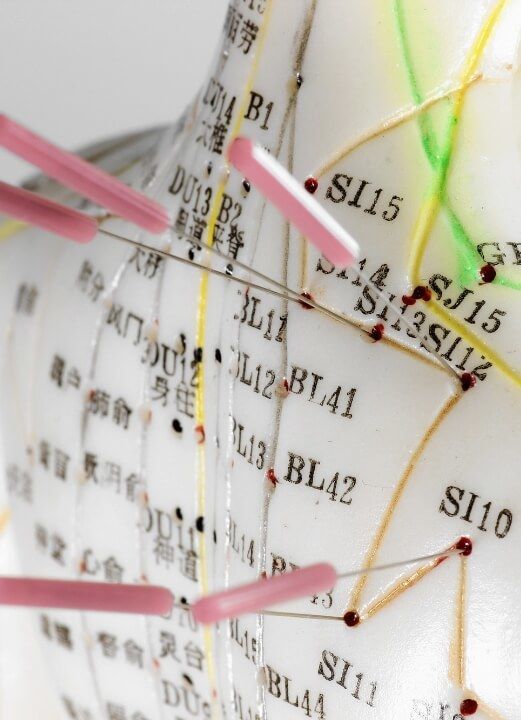
Back Shu points are located along the Bladder meridian on either side of the spine. Each point corresponds to a particular organ and is thought to reflect the state of that organ’s energy, or Qi.
The word “Shu” roughly means “to transport” or “to convey,” which hints at their role in helping regulate the flow of energy between the organs and the rest of the body.
Location and Organization
These points sit about 1.5 cun from the spine (a cun is a proportional measurement used in acupuncture). Each one lines up roughly with the level of its related organ.
For example:
- Lung Shu is around the level of the third thoracic vertebra
- Heart Shu is near the fifth thoracic vertebra
- Kidney Shu sits close to the second lumbar vertebra
This close anatomical relationship is one reason they’re considered so useful in practice.
Functions of Back Shu Points
Back Shu points are used both to assess what’s going on in the body and to treat imbalances.
1. Diagnostic Use
Practitioners often press or palpate these points to check for:
• Tenderness
• Tightness
• Changes in temperature
If a point feels sensitive, it can suggest an imbalance in the related organ.
2. Therapeutic Use
These points can be stimulated using acupuncture, acupressure, or cupping to:
• Support organ function
• Move stagnant Qi
• Strengthen areas of deficiency
• Clear excess patterns
They’re especially helpful for chronic issues and are often used alongside Front Mu points (on the chest or abdomen) for a more complete treatment.
Key Back Shu Points and Their Roles
Here are some commonly used ones:
Lung Shu (BL13)
• Often used for cough, asthma, and shortness of breath
Heart Shu (BL15)
• Helps calm the mind (Shen)
• Useful for anxiety, insomnia, and palpitations
Liver Shu (BL18)
• Supports emotional balance and smooth flow of Qi
• Often used for stress, irritability, and menstrual concerns
Spleen Shu (BL20)
• Helps with digestion and energy production
• Used for fatigue, bloating, and low appetite
Kidney Shu (BL23)
• Strengthens foundational energy (Jing)
• Commonly used for lower back pain, fatigue, and reproductive health
Clinical Significance
Back Shu points are particularly valued because they:
• Tend to reflect long-term imbalances clearly
• Work well alongside techniques like moxibustion and cupping
They’re often included in treatment plans for:
• Respiratory conditions
• Emotional imbalances
• Chronic fatigue
A Modern Perspective
• Nerve pathways
• Fascial connections
• Viscerosomatic reflexes
This may help explain why working on these areas can have an effect on internal organ function.